Polymicrogyria


PolymicrogyriaBilateralPari

  • Irregular cortex with numerous small convolutions and shallow sulci.
  • Etiology – Encephaloclastic insults such as infection (TORCH), intrauterine vascular accident (MCA occlusion), trauma, metabolic disorders.
  • Bilateral perisylvian region is the MC location.
  • 2 histological types – Unlayered & 4-layered
  • MRI – Overfolded cortex with nodular surfaces & irregular “stippled” gray-white matter interfaces
  • D/D – Type 2 lissencephaly, pachygyria, FCD

Schizencephaly


download

  • Dysplastic grey matter lined CSF-filled cleft that extends from ventricular ependyma to pial surface of cortex.
  • Destructive vascular lesions (e.g. MCA occlusion) & infections (e.g. TORCH) before 28 weeks are considered likely etiologies.
  •  Common association – Absent septi pellucidi
  • Open lip – Cleft prominent
  • Closed lip – Cleft barely visible
  • Cleft follows CSF signal intensity on all sequences
  • D/D – Porencephaly (cleft lined by gliotic white matter), arachnoid cyst (displaces adjacent cortex), transmantle heterotopia, deeply infolded polymicrogyria

Imaging evaluation of potential living donor

Introduction

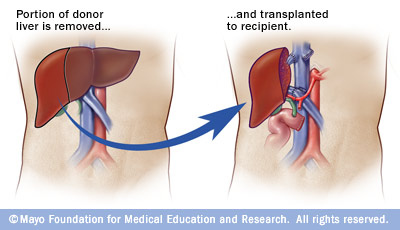
Living donor liver transplantation has evolved into a widely accepted therapeutic option to alleviate the persistent shortage of cadaveric liver transplants. This innovative procedure allows healthy adults to donate a portion of their liver to compatible recipients suffering from end-stage liver disease.

This technique, called living-donor liver transplantation (LDLT), provides an effective alternative means of liver transplantation and is a method of expanding the donor pool in light of the demand and supply imbalance for organ transplants. Imaging plays an important role in LDLT programmes by providing robust evaluation of potential donors to ensure that only anatomically suitable donors with no significant co-existing pathology are selected and that crucial information that allows detailed preoperative planning is available.

Procedures

In the recent past, this preharvest assessment employed a multimodal radiologic evaluation protocol, including:

  1. computed tomography (CT) or magnetic resonance imaging (MRI) for liver planimetry and exclusion of parenchymal lesions
  2. catheter digital subtraction angiography for the display of the hepatic vascular system
  3. endoscopic retrograde cholangiopancreatography (ERCP) for assessing the biliary anatomy
  4. liver biopsy for the assessment of hepatic-cellular infiltration.

In an attempt to simplify and shorten such a time consuming and costly procedure to a minimum, both comprehensive “all-in-one” MRI and multidetector computed tomography (MDCT)-protocols have been advocated. Both approaches combine the advantage of minimal invasiveness with the simultaneous assessment of the hepatic parenchymal morphology and a detailed analysis of the biliary and vascular anatomy in a single diagnostic step.

Image analysis

Analysis of the image data is focused on the following aspects:

  1. Biliary system(Due to the high incidence of biliary variants, a thorough analysis of the biliary anatomy is essential for the surgical outcome in living donor liver transplantation. Failure to recognize even minor intrahepatic branches crossing the dissection line can result in severe postoperative biliary leakage.)
  2. Hepatic arteries
  3. Portal & hepatic veins
  4. Liver parenchyma & parenchymal lesions(To exclude diffuse liver disease and hepatic masses capable of compromising liver function in the transplant hepatic graft)
  5. Transplant volumes(An accurate liver volumetry is of paramount importance to avoid subjecting the donor to unnecessary risks and to reduce the risk of graft failure)

Conclusion

Both “all-in-one” MDCT and “all-in-one” MRI are well suited to extensively assess the liver anatomy of potential donors in a single diagnostic step. This might reduce the need for multimodality evaluation protocols, hence relieving the medical infrastructure, but also augmenting the candidate’s acceptance of the pretransplantation survey.

Further reading

  1. Schroeder, Tobias, et al. ““All‐in‐one” imaging protocols for the evaluation of potential living liver donors: Comparison of magnetic resonance imaging and multidetector computed tomography.” Liver transplantation 11.7 (2005): 776-787.
  2. Low, G., et al. “Imaging evaluation of potential donors in living-donor liver transplantation.” Clinical radiology 63.2 (2008): 136-145.

Image

Diffuse Lung Diseases – High Yield Facts

  • Thickened intralobular lines MC seen in idiopathic pulmonary fibrosis (IPF).
  • Smooth fissural thickening in pulmonary edema. Nodular fissural thickening in sarcoidosis & lymphangitic carcinomatosis.
  • Ill defined centrilobular nodules in hypersensitivity pneumonitis, COP, RB-ILD.
  • Subpleural lines MC in Asbestosis.
  • Honeycombing frequently seen in UIP, hypersensitivity pneumonitis & occasionally in sarcoidosis.
  • Thin-walled cysts – LAM, eosinophilic granulomatosis
  • UIP & sarcoidosis r d MC causes of irregular lung interfaces.
  • GGO defined as an area of increased attenuation on HRCT within which normal parenchymal structures r visible. Produced by thickening of alveolar septa by inflammatory exudate. Seen in DIP, PCP, NSIP, AHP, IPE. Often implies an active inflammatory process that is reversible.
  • Sarcoidosis & UIP r d diseases MC asso with architectural distortion.
  • Traction bronchiectasis MC in UIP & fibrotic sarcoidosis.
  • Conglomerate masses – End stage sarcoidosis
  • Consolidation – Increased lung density that obscures underlying vessels. Air bronchogram commonly present. Can be seen with any airspace- filling process. Occasionally seen in ILD like UIP, sarcoidosis.


CHRONIC ILDs

  1. Chronic interstitial pulmonary edema
  2. Connective tissue ds
  3. Idiopathic chronic interstitial pneumonias
  4. Other chronic interstitial lung ds


CNS Question Bank

Brain Development and Congenital Malformations

  • Classify congenital diseases of brain. MRI Findings. Differentiate on basis of principles of CT & MRI.
  • Describe normal brain development. Classify congenital malformations.
  • Arnold Chiari malformation (**) (2008)
  • Agenesis of corpus callosum – CT
  • Midline anomaly of brain – Role of imaging in identification
  • Dandy Walker syndrome
  • CT in post. cranial fossa
  • Adv. & disadv. of post. fossa lesion of brain
  • Hernia through foramen of Morgagni & Luschka
  • Neuroectodermal dysplasia (Phakomatoses)
  • Phakomatoses – Defn, Types, C/F, R/F of Tuberous sclerosis
  • Tuberous sclerosis
  • Sturge Weber syndrome

Cerebral Vasculature, Trauma, Stroke

  • Role of CT in head injury
  • Head injury – Radiology & CT appearance (LQ)
  • How will u inv. a case of head injury radiologically?
  • Describe the etiology & presenting features of SAH. Describe distribution of SAH by aneurysmal location. Describe the interventional radiological procedures of endovascular Tt of aneurysm. (5+5+10) (2013)
  • Radiological anatomy of subarachnoid spaces. Role of CT & MRI in evaluation of SAH.
  • SAH – Imaging & causes (*****)
  • Intracranial hematoma – CT
  • Role of MR Angio in diagnosis of SAH (2005)
  • SAH – Causes, CT findings. How modern imaging helps in assessing causative lesions?
  • Describe cerebral circulation with reference to conventional angiography, CT & MR angiography.
  • Describe the branches of ICA & give line diagram as seen on carotid angiography. How will you investigate a case of SAH?
  • Anatomy of cerebral arteries. What are persistent carotico-vertebral anastomosis?
  • Cerebral infarct – Mechanism, CT & MRI finding
  • Acute infarct (SN)
  • Ischemic cerebrovascular disease – Role of CT
  • CVA – Causes & MRI
  • CT findings of tumors vs large infarct
  • Role of MRI in stroke (LQ 2007)
  • DSA in vascular anomalies of brain (LQ)
  • Intracranial vascular occlusion – Anatomy
  • Classify aneurysm. Discuss briefly the various radiological methods avlbl with their relative merits.
  • Discuss radiological role in intracranial aneurysm with spl. ref. to Mx by interventional radiology
  • Role of interventional radiology in Mx of AVM of brain (2005, 2006)
  • What is interventional radiology? Its role in cerebrovascular system.
  • Role of Interventional radiology in cerebrovascular system
  • Discuss the various interventional procedures related to neuroradiology (2003)
  • Moya moya ds
  • Circle of Willis
  • Carotid artery angiogram – Indication, Technique, Angio. findings of meningioma

Brain Tumors

  • Classify brain tumor – CT & MRI findings
  • Classify intracranial tumors. CT & Angiographic features of gliomas
  • Glioma – CT & Angiographic findings (LQ)
  • Intracranial glioma (supratentorial) – CT appearance. Compare with angiographic findings, stressing on merits & demerits of both
  • Classify supratentorial tumors. Describe the methods of inv. in case of suspected supratentoial tumor (****)
  • Ependymoma (SN 2007)
  • Intracranial meningioma (*****)
  • Meningioma – CT & Angiographic findings (LQ)
  • Meningioma – Classification
  • Meningioma – CT, Classification
  • Intracranial meningioma – R/F (X-ray, CT, Angio)
  • Hemangioblastoma of CNS
  • PNET
  • Pituitary tumors – Classification. Diagnosis of acromegaly
  • Pituitary disease – Radiological features in X-ray, CT, MRI
  • Pituitary adenoma -Plain X-ray, CT, MRI
  • Name the hormones secreted by pituitary gland. Describe in details the C/F & R/F due to excess of ACTH.
  • Sella turcica – Radiological anatomy
  • Anatomy of pituitary fossa (SN 2006)
  • Anatomy of pituitary gland & modern imaging trends for sellar & parasellar lesions
  • Sella turcica – Enumerate the intrasellar tumors
  • Causes of pediatric brain tumor. How will u inv. a case of post. fossa neoplasm? Give diff. radiological findings.
  • CP angle tumors – Names, Imaging modalities, R/F (2 times)
  • Adv. of MRI to understand CPA tumors. Give their distinctive MRI features (2008)
  • IAC – Anatomy & imaging of a case of 8th nerve tumor
  • Acoustic neuroma (LQ)
  • Rathke’s pouch tumor (***)
  • Rathke’s cleft cyst
  • Colloid cyst
  • Craniopharyngioma (2 times)
  • Carotid body tumor
  • Cerebral lymphoma
  • Pineal gland tumors
  • Choroid plexus tumors

Brain Infections

  • NCC (*****)
  • NCC – CT (***) (LQ)
  • Intracranial infective lesion – MRI & its advantage over CT in tuberculoma of brain
  • Neurotuberculosis – CT
  • Neurotuberculosis (SN 2008)
  • CT findings in different brain abscess
  • CT features in pyogenic brain abscess (LQ 2007)
  • Brain abscess – MRI (LQ), CT (LQ)
  • Ring enhancing lesions of brain (2007) (2 times)
  • Single ring enhancing lesion
  • Describe the imaging features of various pathologies as presented by ring enhancing lesions of brain.

White matter abnormalities & Degenerative diseases

  • Cerebral ventricles anatomy
  • Ventricular system – Radio. anatomy with diagram, Mech. of formation & circulation of CSF, Radio. procedures to study the ventricular system of brain
  • Hydrocephalus – Pathology, CT
  • CT findings of obstructive hydrocephalus
  • Hydrocephalus of a child – Role of X-ray, USG, CT
  • Hydrocephalus – Types & causes (2005)
  • CSF circulation (****)
  • Formation & circulation of CSF. Discuss the pathophysiological mechanism of hydrocephalus (2007)
  • Communicating hydrocephalus
  • Arachnoid granulations
  • Role of MRI in MS. Recent advances in imaging for diag. of MS
  • MS (SN)
  • What are the acquired white matter degenerative disorders? Write the brief pathophysiology & detailed imaging features of MS.
  • Krabbe ds
  • Leigh ds
  • Wilson ds

Spine

  • Role of MRI in vertebral disesaes
  • CT in spinal lesion
  • CT vs MRI in spinal lesions
  • Spinal cord – Radiological anatomy. Adv. & disadv. of non-ionic contrast in conventional myelography
  • Classify spinal tumors. Describe the imaging features of spinal tumors.
  • Spinal tumors – Types & investigations
  • Spinal tumors in children – Radiological inv.
  • Myelogram in spinal tumors (2 times)
  • Spinal TB (***)
  • Pathology & R/F of vertebral TB
  • Syringomyelia (2 times)
  • Diastematomyelia
  • Tethered spinal cord (SN 2007)
  • Spinal dysraphism
  • Single ivory vertebral body
  • Vertebral trauma – CT
  • Radiological evaluation of spinal trauma
  • Traumatic paraplegia – Imaging importance
  • Diff. radio. inv. done in a case of paraplegia foll. RTA

Miscellaneous

  • Write about the advantages of SSFP sequences over conventional MRI sequences for evaluation of cranial nerves. Describe identification points of all cranial nerves from other curvilinear structure & common disease processes. (3+10+7) (2013)
  • Describe the anatomical relationship of 8th cranial nerve in petrous part of temporal bone. Describe the methods of imaging the petrous part of temporal bone. (10+10) (2013)
  • Diffusion & perfusion imaging in intracranial SOL (SN 2013)
  • Describe the radiological anatomy of CVJ by various radiological methods. Discuss common pathologies of CVJ region.
  • CVJ anomalies (2 times)
  • Significance of intracranial calcification
  • Intracranial supratentorial calcification
  • Calcification of brain – Causes & D/D
  • Basal ganglia calcificaton
  • Posterior ethmoidal air cells (2 times)
  • Mastoid air cells
  • Chronic otitis media
  • Cholesteatoma (*****)
  • Empty sella (SN – 3 times)
  • Vertebroplasty
  • Leptomeningeal cyst (SN 2007)
  • J shaped sella
  • Dentate nucleus (2X)
  • Cavernous sinuses (2X)
  • Angiographic sylvian point
  • Pineal body
  • Jugular foramen
  • Mx of epilepsy of recent onset
  • Base of skull
  • Petrous bone (***)
  • IV foramina
  • IV foramina of cervical spine
  • Role of radio. in a case of raised ICT
  • Subdural empyema
  • Craniosynostosis (2013)

Hyperparathyroidism

Hyperparathyroidism is a disease of increased bone resorption and bone formation. Subsequently, plain radiographic findings may include resorption and sclerosis of numerous sites in the skeletal system.

Historically, osteitis fibrosa cystica was used to describe the advanced skeletal disease in primary hyperparathyroidism. Bone findings were characterized by the osteoclastic resorption of bone, osteoblastic bone formation, and fibrous replacement of marrow, with radiographic findings of subperiosteal resorption, brown tumors, bone cysts, and sclerosis.

These days, the most common radiologic finding in primary hyperparathyroidism is osteopenia, which may be generalized or asymmetric. Fine trabeculations are initially lost, with resultant coarse and thickened trabeculae. The disease may progress with further destruction that results in a ground-glass appearance in the trabeculae. About 30-50% of the bone density must be lost to show changes on radiographs. Other methods for the quantification of bone density, such as QCT scanning and DXA, are more sensitive in the evaluation of osteopenia.

Additional findings include bone resorption, which may occur at many different anatomic sites. Bone resorption may be classified as subperiosteal, intracortical, trabecular, endosteal, subchondral, subligamentous, or subtendinous. Subperiosteal bone resorption is an early and virtually pathognomonic sign of hyperparathyroidism, and this finding is marked by marginal erosions with adjacent resorption of bone and sclerosis. An unusual lacelike appearance may be seen beneath the periosteum with an occasional spiculated external cortex. The underlying resorptive process may progress to complete cortical disappearance.

Although subperiosteal bone resorption can affect many sites, the most common site in hyperparathyroidism is the middle phalanges of the index and middle fingers, primarily on the radial aspect.

After resection of an adenoma, lesions may become sclerotic on radiographs. Once considered a finding that was characteristic of primary hyperparathyroidism, brown tumors are more common in secondary hyperparathyroidism because of the increasing population and life expectancy of patients undergoing dialysis.

Calcium pyrophosphate dihydrate crystal deposition disease (CPPD) is more common in association with primary hyperparathyroidism than with secondary hyperparathyroidism. Chondrocalcinosis may affect the menisci of the knee, the triangular cartilage of the wrist, and the symphysis pubis. CPPD arthropathy is less common in these patients than in patients with idiopathic disease.

Other radiographic findings in primary hyperparathyroidism include varying degrees of sclerosis, although generalized sclerosis is more common in secondary hyperparathyroidism. Soft-tissue and vascular calcification is more common in secondary disease, as is superior and inferior band sclerosis of the spine, which is called rugger-jersey spine. The laxity of ligaments and tendons primarily affects the sacroiliac and acromioclavicular joints, whereas rupture may be seen at several sites, including the quadriceps, triceps, and patellar tendons.

In the setting of elevated serum calcium levels and elevated PTH levels, the diagnosis of primary hyperparathyroidism is certain. However, radiographic findings of subperiosteal resorption are most specific for the disease and should prompt consideration of the primary hyperparathyroidism.